Plan Smarter Spring Monitoring Before Fieldwork Ramps Up
Farm connectivity solutions help turn readings from distant paddocks, waterways and equipment into information you can act on. In September, spring pasture growth, calving, cropping, irrigation planning and fast-changing weather can all make timely field data more useful.
Across New Zealand, we see that the right connection depends on what you are monitoring and where it sits. LoRaWAN and cellular are two common options, and neither is automatically the better choice for every property. Our work includes environmental IoT monitoring, weather stations, agricultural sensors, hydrology systems, wireless networking and certified Cel-Fi cellphone boosters, so we look at the whole monitoring setup rather than one device in isolation.
LoRaWAN Extends Coverage Across Large, Low-Power Farms
LoRaWAN is designed to carry small sensor messages over long distances while using very little power. That makes it well suited to farms, orchards, catchments and rural properties where sensors are spread out and may need to run on batteries for extended periods.
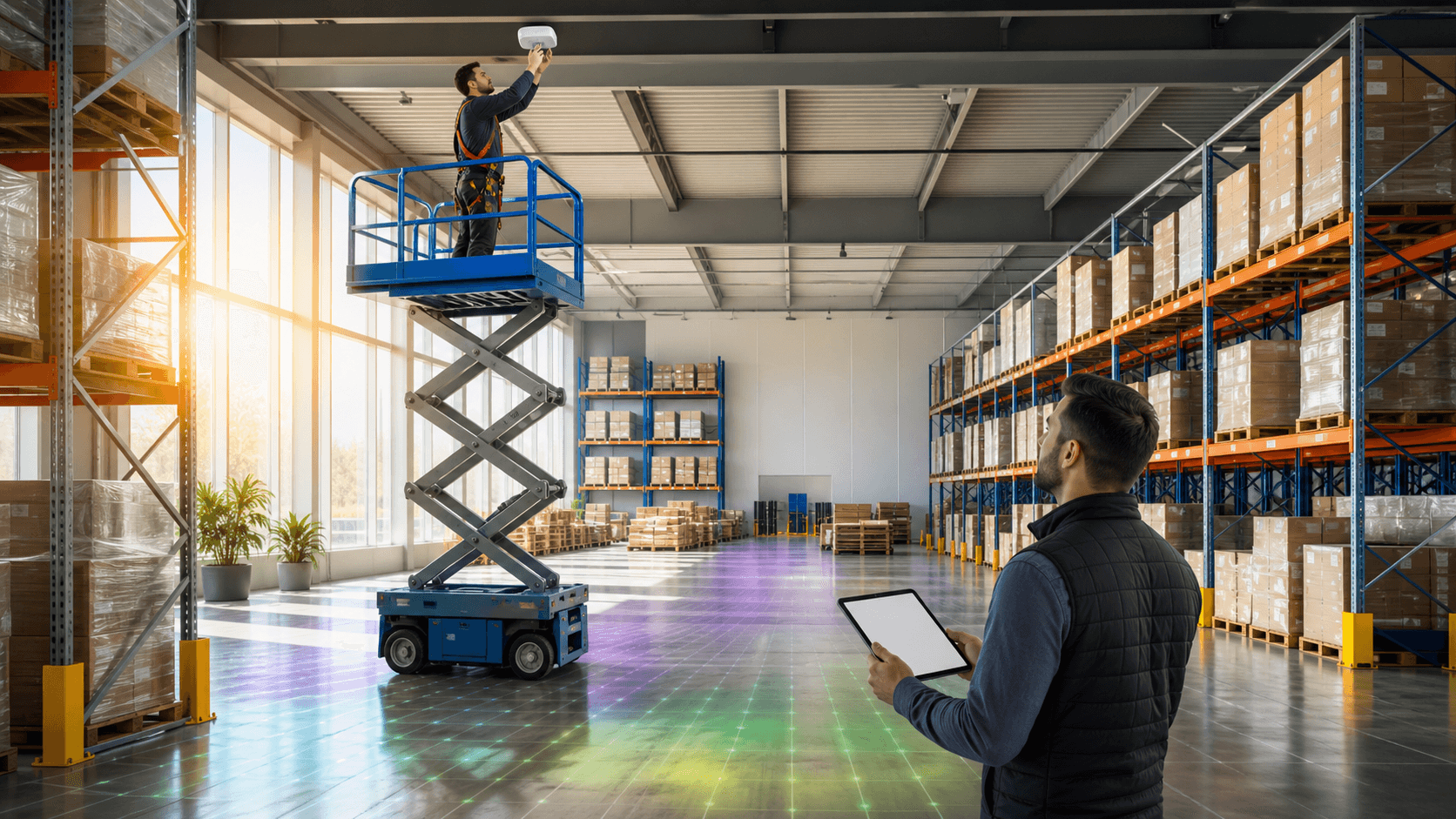
A private LoRaWAN gateway can gather readings from many sensors and pass that information to a dashboard. This approach can create useful coverage across areas where mobile signal is weak or unavailable, provided the gateway and sensor locations are planned carefully.
LoRaWAN can support monitoring equipment such as:
- Soil moisture and soil temperature probes
- NPK sensors for nitrogen, phosphorus and potassium readings
- Weather stations
- Water level and flow sensors
- Water-quality equipment measuring turbidity, pH, conductivity or dissolved oxygen
For a property with many low-power sensors, LoRaWAN can reduce the need for every device to have its own mobile connection. It is particularly useful when readings are sent on a schedule, such as soil conditions every few hours or water levels at set intervals.
There are limits to consider. LoRaWAN is not intended for high-bandwidth jobs such as live CCTV video, large file transfers or frequent camera streams. Hills, gullies, shelter belts, sheds and dense vegetation can also affect the real-world range. We recommend assessing the site instead of relying on headline distance figures.
Cellular Connects Remote Assets with Strong Mobile Coverage
Cellular sensors use an available mobile network to send information directly to a cloud platform. Where dependable coverage already exists, this can make deployment simple because each device operates independently rather than reporting through a central farm gateway.
This option can suit a standalone weather station, a remote pump, a water tank, mobile equipment or a temporary monitoring site. It can also work well when a sensor is a long way from the main farm area but has reliable mobile signal.
Cellular connectivity may be a practical fit when you need:
- Direct cloud reporting from a single device
- A faster rollout at a site with proven mobile coverage
- More data capacity than a low-power sensor network provides
- Monitoring that moves between locations
- A backhaul connection for a LoRaWAN gateway
Before choosing cellular, we assess signal strength, network availability, power demand and the ongoing connection requirements for each device. A sensor that works well near a road or house may not perform the same way in a dip, behind a hill or beside a stand of trees.
In suitable buildings and operational areas, certified Nextivity Cel-Fi cellphone boosters can improve usable mobile coverage. These boosters can be useful in workshops, offices and other places where your team needs a stronger connection. Cel-Fi products are the only certified cellphone boosters in New Zealand.
Compare Farm Connectivity Solutions by Sensor and Site
The best choice usually comes down to the property, not the label on the technology. We start by looking at where sensors need to sit, how often they need to report, what power is available and how the land may block or carry a signal.
LoRaWAN is often the stronger option when you have many low-power sensors spread across one property. Cellular can be better for independent devices in locations with dependable mobile coverage. In many cases, a hybrid system makes the most sense. LoRaWAN sensors can report to a farm gateway, while the gateway uses cellular to send data to a cloud dashboard.
When comparing farm connectivity solutions, we consider:
- Property size, terrain and vegetation
- Existing mobile coverage at each sensor location
- The number of sensors and their reporting schedule
- Power availability for gateways and standalone devices
- The type of data being sent, from simple readings to higher-capacity reporting
A gateway placed in the wrong spot can leave a surprising number of blind areas. Likewise, a cellular device may look suitable on a coverage map but struggle once it is installed beside a bank, under tree cover or inside a shed. Site testing and careful placement are part of building a system you can rely on.
Build Reliable Monitoring From Soil to Waterways
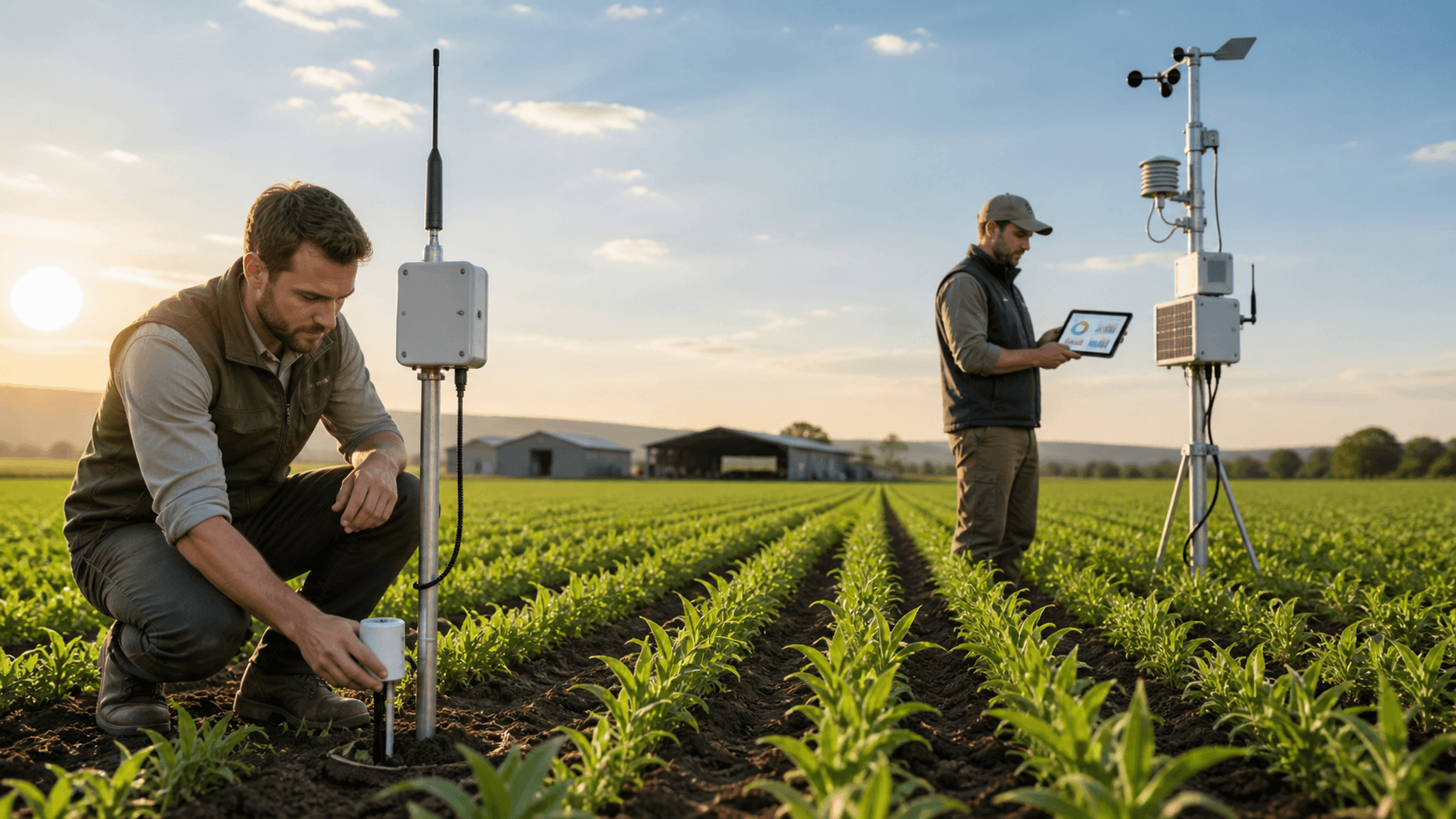
Connectivity matters because the data behind it can support day-to-day decisions. Soil moisture and soil temperature sensors can help guide irrigation timing, pasture management and crop planning. NPK sensors add another view of conditions in the ground, helping you build a clearer picture before making fertiliser decisions.
Local weather stations can track rainfall, wind, temperature and humidity. During spring, those readings can help with decisions around irrigation, spraying and fieldwork timing, especially when conditions change quickly across a property.
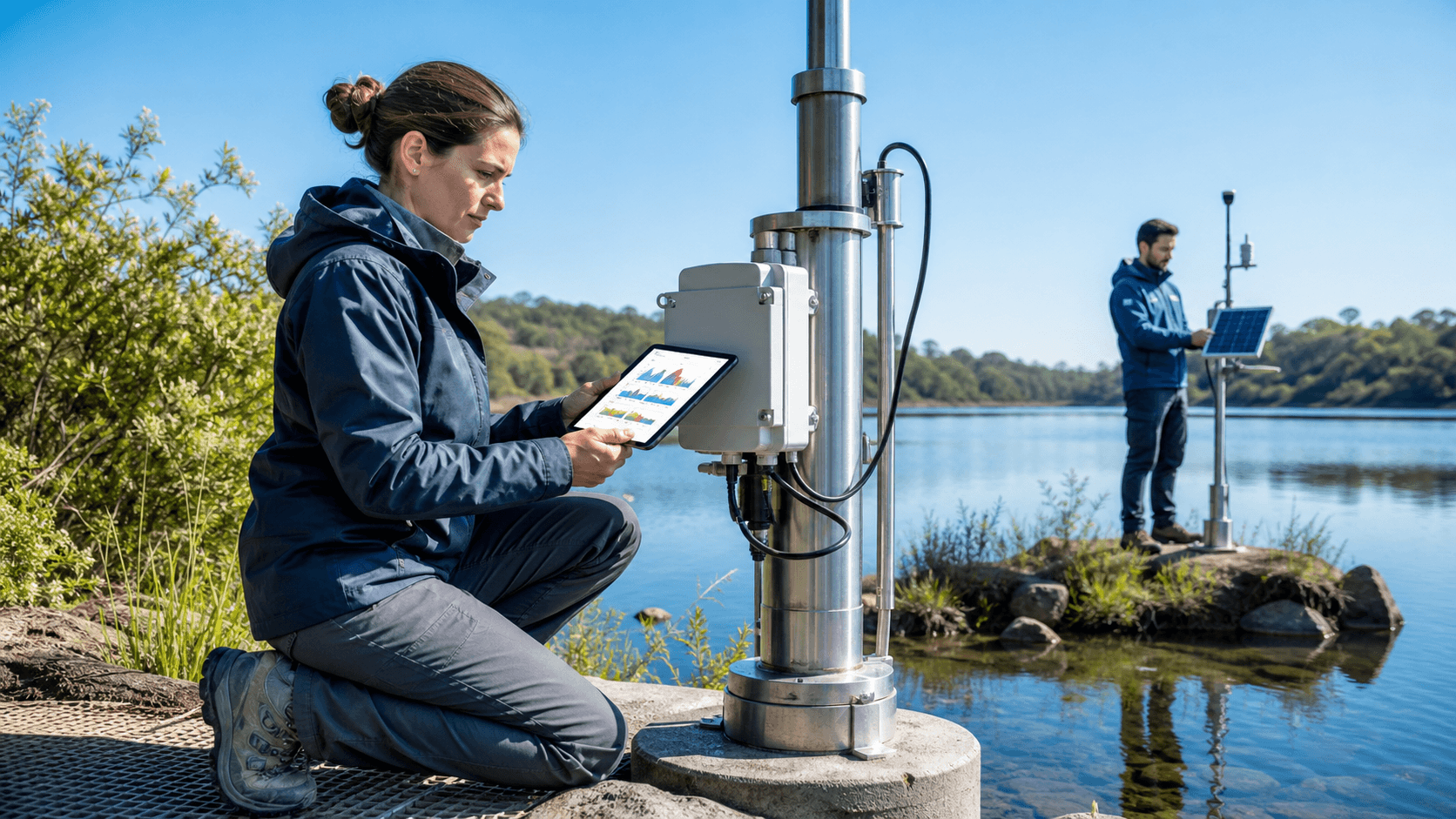
Water monitoring can be just as important. Our hydrology systems can monitor water level and flow, while water-quality monitoring can include turbidity, pH, conductivity and dissolved oxygen. These readings can support water management, consent reporting, environmental protection and an earlier response when conditions start to shift.
A successful setup needs more than a good sensor. It also needs suitable connectivity, dependable power, secure mounting, clear data visibility and ongoing support. When one part is overlooked, even high-quality sensor readings can become hard to collect or act on.
Choose the Right Connection for Every Paddock
LoRaWAN is often well suited to large numbers of low-power sensors across a farm, while cellular can be a strong choice for standalone equipment with reliable mobile coverage. The most useful systems may use both, matching each connection type to the job it needs to do.
Before committing to one technology, assess terrain, sensor locations, mobile signal, power options and your monitoring goals. A connection that suits one paddock, pump site or waterway may not suit the next, so the practical answer is to plan for the conditions on the ground.
Turn Field Data Into Clear Decisions
Our farm connectivity solutions support reliable monitoring for weather, soil conditions, water levels, flow and water quality. Remote Networks can help match sensors, networks and power options to the information you need from each site. Contact us to discuss an environmental monitoring system designed for your operation.